


Question
Who among the following lives immediately below H’s floor?
Study the following information carefully and answer the questions given below. Nine persons – A, B, C, D, E, F, G, H and I – are living on the same building such as ground floor is numbered as 1, just above it is floor 2, then the top floor is numbered as 9 but not necessarily in the same order. The following information is known about them. Only two persons live between C’s floor and B’s floor. Neither C nor H lives on an odd-numbered floor. The person who lives immediately above B lives three floors above F. There is only one floor between H’s floor and D’s floor. The number of floors above D is the same as the number of floors below G. At least one person lives between B and H. The number of floors between G and F is the same as the number of floors between E and
D. A lives below I but above E
D. A lives below I but above E
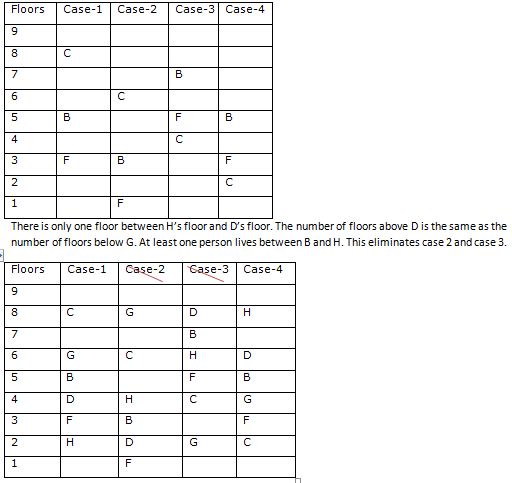 The number of floors between G and F is the same as the number of floors between E and D. A lives below I but above E. This eliminates case 4.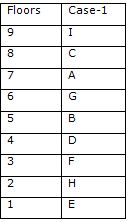
More Puzzles Questions
- Weight of which of the following box is 8kg?
- Who visits just before the one who likes White?
- Which of the following statements is correct?
- Which of the following box is kept immediate above box G?
- Who likes Sanskriti school?
- How much salary D gets?
- How many persons purchased bungalow between Babli and Farun?
- Who among the following person likes banana?
- Who among the following has off day immediately on the next day of Mahi’s off day?
- Who conducts workshop for Company J and on which day?
Relevant for Exams:
Hey! Ask a query
Please enter email id
The email must be a valid email address.
Please enter Mobile Number
Please enter valid Mobile Number
Please enter your Doubt

Think You're Ready for RBI Grade B?
RBI Grade B 2026 Phase 1 Memory Based Paper
- 200 Questions with Detailed Solutions
- Section-wise Coverage (GA, English, Quant & Reasoning)