


Question
How many persons are seated in a table (Including
unknown persons)? Study the following information carefully and answer the questions given below it. Certain numbers of people are sitting in a square shaped table. All are facing towards the center. Only one person seated at each corner and remaining persons are seated at the Edges of the square table. Each of them has different age. Only few of them seating positions are known. Q sits at one of the corner of the table. Same Number of people seated in opposite edges. At least two but not more than four people sitting on each edges of the table. P sits at one of the corner. The one whose age is 36 years, sit second to the left of P. Three persons are sitting between T and V. T is 36 years old. Q sits immediate left of V. S whose age is 52 sits sixth to the right of the one whose age is 10 less than S and both of them are immediate neighbor of the person sitting at the corner. Neither P nor T is an immediate neighbor of S. U is an immediate neighbor of the one whose age is 44. The one who is 48years old sits fourth to the right of U. W sits third to the left of S. R sits sixth to the left of W. The age of P is equal to half of the age of V. The one whose age is 44 sit second to the right of the one who is sitting opposite to R. Number of person sits between P and R when counted from left of P is equal to number of person sit between R and the one whose age is 30.Solution
At least two but not more than four people sitting on each edges of the table. P sits at one of the corner. The one whose age is 36 years, sit second to the left of P. T is 36 years old. 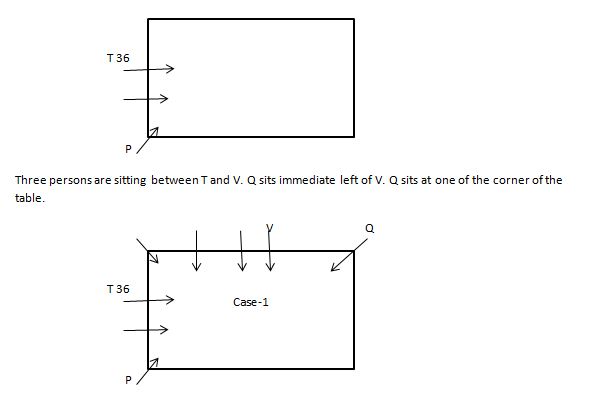
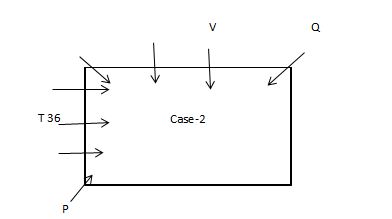 Same Number of people seated in opposite edges.
 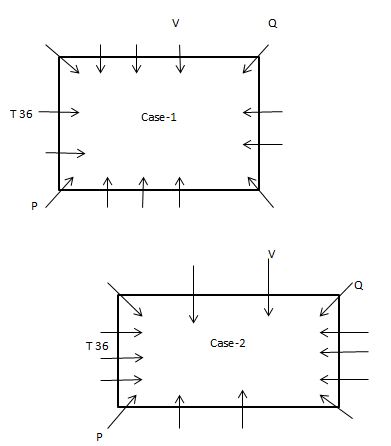 S whose age is 52 sits sixth to the right of the one whose age is 10 less than S and both of them are immediate neighbor of the person sitting at the corner. Neither P nor T is an immediate neighbor S.
 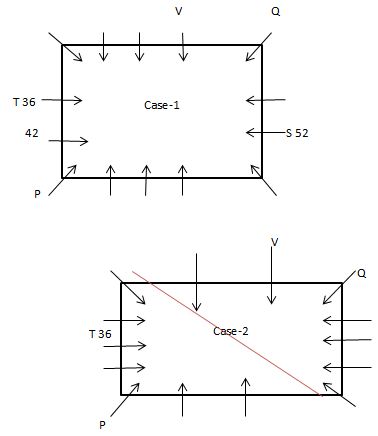 We cannot fix the position of S and the one whose age is 42 in case2, so this case is eliminated. W sits third to the left of S. R sits sixth to the left of W. The one whose age is 44 sit second to the right of the one who is sitting opposite to R.
 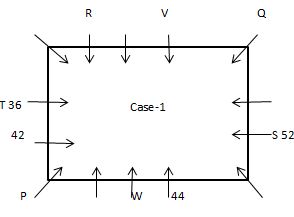 U is an immediate neighbor of the one whose age is 44. The one who is 48years old sits fourth to the right of U. The age of P is equal to half of the age of V. Number of person sits between P and R when counted from left of P is equal to number of person sit between R and the one whose age is 30.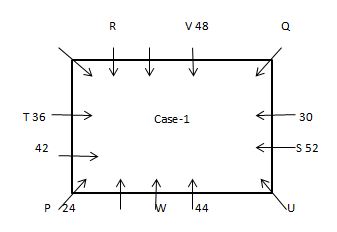
B and C are standing on point Q and P respectively, which are 300km apart. A starts moving to and from between Q and P at 25km/hr while A starts moving ...
Anshul lives on 16th floor and Keshav lives on 49th floor. Anshul goes up at a rate of 28 floors per minute and Keshav comes down at a rate of 38 floo...
A motor car starts with a speed of 60 km/h and increases its speed after every two hours by 15 km/h. In how much time will it cover a distance of 360 km?
Amit walks for 2 hours at a speed of 's' km/hr, and then his speed increases by 25 km/hr, covering the remaining distance in 3 hours. If Amit's speed ha...
Train P starts from Lucknow to Dehradun at 11:55 am with an average speed of 55 m/s. Train Q starts from Dehradun to Lucknow at 1:35 pm with an average ...
- A truck was moving at 50 km/hr and after ‘x’ hours it increased its speed by 15 km/hr. Then, it continued at the new speed for (x + 4) hours. If the di...
Aman travels from his house to the library, which is 5 km away, by cycling. If he returns to his home by foot with speed of 5 km/hr and takes 30 minute...
- A man takes 360 minutes to travel a certain distance by jeep at a speed of 54 km/h. What should be his speed on foot to cover the same distance in 8 hours?
A man running with the speed of 55 km/hr covers a certain distance in ‘x’ hours. If the same distance can be travelled with a speed of 60 km/h in (x...
A leopard is Chasing a deer that is positioned 12 km ahead. The leopard has a speed of 96 km/hr, while the deer's speed is 60 km/hr. If the leopard catc...
Relevant for Exams:


