


Question
Which of the following person sits sixth to the left of the one who works in company B?
Study the following information carefully and answer the questions given below: Ten persons - E, A, J, S, T, U, K, L, M and S are sitting around a circular table facing centre. Each one of them works in different companies B, R, Q, P, F, O, I, Z, H and W. Person name starts with consecutive alphabet does not sit next to each other. Three persons sit between E and the one who works in company F. Two persons sit between K and S, who does not work in company F. U sits third to the left of S. The one who works in company P sits second to the right of T. The one who works in company H sits fourth to the right of J. The one who works in company W sits immediate right of
A. As many persons sit between L and the one who works in company R is same as the persons sit between L and the one who works in company Q. Neither S nor U is an immediate neighbour of E. Immediate neighbour of K neither works in company R nor works in company Q. The one who works in company I sits immediate right of the one who works in company Q. K sits third to the left of the one who works in company F. As many persons sit between the one who works in company B and the one who works in company R is as same as the number of persons sit between the one who works in company Z and the one who works in company W. M sits immediate right of the one who works in company P. The one who works in company Z and the one who works in company W are not immediate neighbours.
A. As many persons sit between L and the one who works in company R is same as the persons sit between L and the one who works in company Q. Neither S nor U is an immediate neighbour of E. Immediate neighbour of K neither works in company R nor works in company Q. The one who works in company I sits immediate right of the one who works in company Q. K sits third to the left of the one who works in company F. As many persons sit between the one who works in company B and the one who works in company R is as same as the number of persons sit between the one who works in company Z and the one who works in company W. M sits immediate right of the one who works in company P. The one who works in company Z and the one who works in company W are not immediate neighbours.
 Case 1 will be dropped because two persons sit between K and S, who does not work in company F. U sits third to the left of S. Neither S nor U is an immediate neighbour of E. The one who works in company P sits second to the right of T. M sits immediate right of the one who works in company P.
 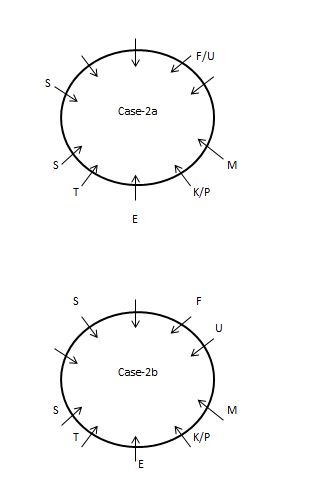 The one who works in company H sits fourth to the right of J. The one who works in company W sits immediate right of A.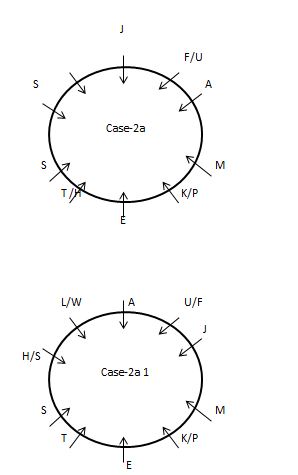
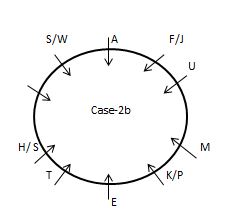 Case 2A will be dropped because the one who works in company W sits immediate right of A. Case 2B will be dropped because A and J are not immediate neighbours. As many persons sit between L and the one who works in company R is same as the persons sit between L and the one who works in company Q. Immediate neighbour of K neither works in company R nor works in company Q. The one who works in company I sits immediate right of the one who works in company Q. As many persons sit between the one who works in company B and the one who works in company R is as same as the number of persons sit between the one who works in company Z and the one who works in company W. The one who works in company Z and the one who works in company W are not immediate neighbours.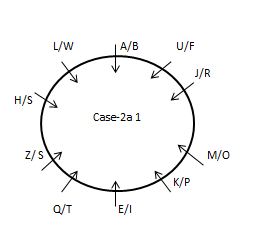
More Seating Arrangement Questions
- Six person R, S, T, U, V and W are sitting around a circular table facing each other (not necessarily in the same order). U is on the immediate right of W....
- Which of the following statements is true regarding V?
- Six persons S, T, U, V, W and X are sitting in a row facing north. S sits third to the left of X. T sits to the immediate left of U but not adjacent to X o...
- Eight students – Pi, Qi, Ri, Si, Ti, Ui, Vi, and Wi are sitting around a circular bench, facing the centre. Pi is sitting third to the left of Wi and thir...
- Six tractors KZ, MZ, OZ, QZ, SZ, and UZ are parked around a circular parking space facing towards the centre (not necessarily in the same order). QZ is sec...
- If all the person starting from L are rearranged towards left of L in alphabetical order, then how many person remains unchanged except L?
- How many persons are sitting in the row?
- Seven friends (D, E, F, G, H, I and J) sit in a row facing towards north. I sits in the middle of row. I sits immediate left of D, who sits second to the l...
- How many persons attend the seminar between M and his daughter?
- Who amongst the following is an immediate neighbour of the one who likes Jodhpur?
Relevant for Exams:
Hey! Ask a query
Please enter email id
The email must be a valid email address.
Please enter Mobile Number
Please enter valid Mobile Number
Please enter your Doubt

Think You're Ready for RBI Grade B?
RBI Grade B 2026 Phase 1 Memory Based Paper
- 200 Questions with Detailed Solutions
- Section-wise Coverage (GA, English, Quant & Reasoning)