


Question
Which of the following statement are true?
Which of the following statement are true?
I. H likes brown
II. A sits opposite to C
III. The one who likes Black sits immediate left of C
IV. No one sits between A and E.
Study the following information carefully and answer the below questions Eight persons- A, B, C, D, E, F, G, and H are sitting on the circular table facing the center. They like different colour- Red, Yellow Blue , Green, Black, White, Orange, and Brown but not necessarily in the same order. The consecutive alphabetically named persons are not sitting together. C sits second to the left of the one who likes Blue colour. Two persons sit between C and H. B sits second to the left of
D. G sits immediate left of the one who likes Black. Neither C nor D like Black. G and D are not immediate neighbors. G does not sit opposite to
D. The number of persons sit between E and A is the same as the number of persons sit between F and the one who likes Brown when counted from the right of both A and F. F sits opposite to the one who likes Orange. Neither G nor H like Orange. The one who likes White sits second to the right of the one who likes Red. D does not like Red. F does not like Yellow colour.
D. G sits immediate left of the one who likes Black. Neither C nor D like Black. G and D are not immediate neighbors. G does not sit opposite to
D. The number of persons sit between E and A is the same as the number of persons sit between F and the one who likes Brown when counted from the right of both A and F. F sits opposite to the one who likes Orange. Neither G nor H like Orange. The one who likes White sits second to the right of the one who likes Red. D does not like Red. F does not like Yellow colour.
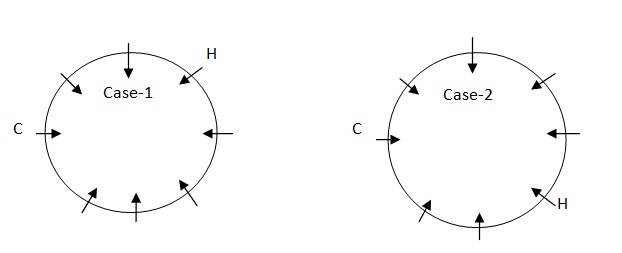 Again we have, B sits second to the left of D. From the above condition and note, there are four possibilities.
 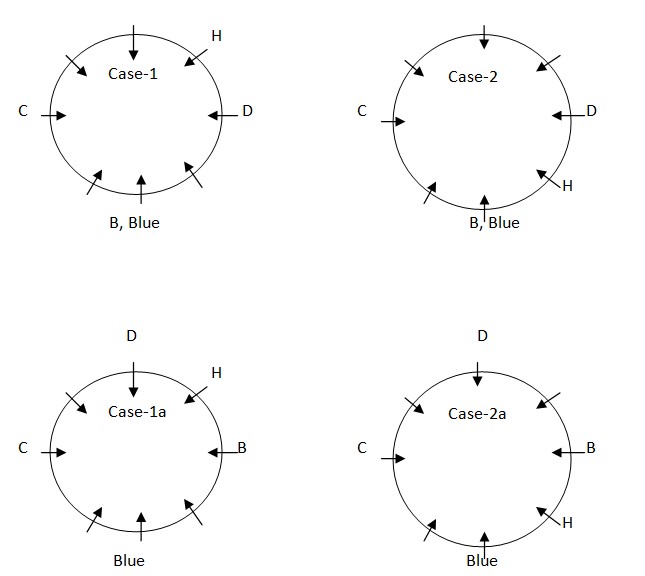 Again we have, G sits immediate left of the one who likes Black. Neither C nor D like Black. G and D are not immediate neighbors. G does not sit opposite to D. From the above condition, Case1 and case2a get eliminated because there is no possibility to place G.
 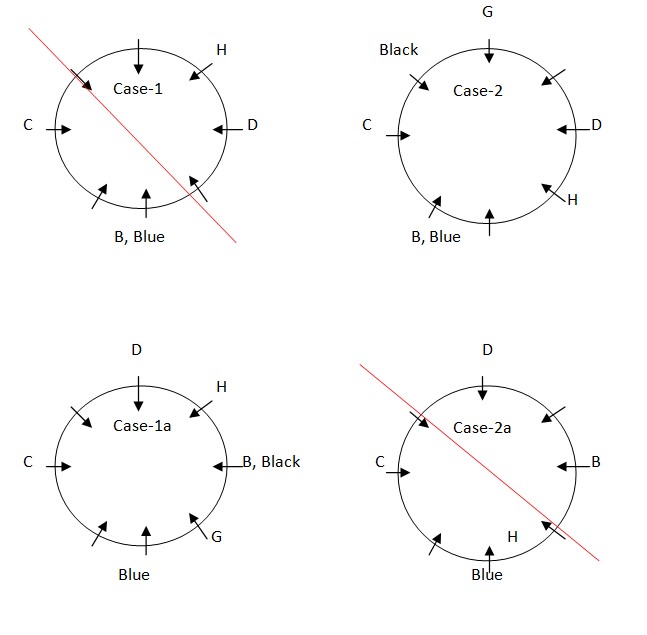 Again we have, The number of persons sit between E and A is the same as the number of persons sit between F and the one who likes Brown, when counted from the right of both A and F F sits opposite to the one who likes Orange. Neither G nor H like Orange. From the above condition and note, case1a gets eliminated because there is no possibility to place F.
 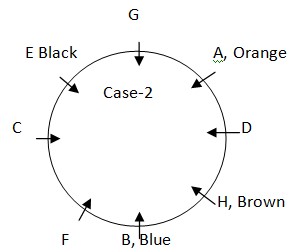 Againwe have, TheonewholikesWhitesitssecondto the right of the one who likes Red. DdoesnotlikeRed. FdoesnotlikeYellowcolour. Fromtheabovecondition,case2showsthefinalarrangement.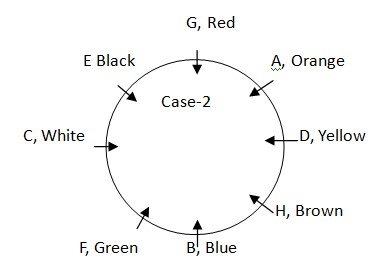
More Seating Arrangement Questions
- Which of the following statement is true?
- Who among the following person sit immediate right of T?
- H, I, J, K, L, M, N and O are sitting around a square table facing the centre of the table. Four of them are sitting at either of the corners while the oth...
- Who among the following does not belong to the group?
- Who sits third to the right of the person, who likes Coca cola in the row arrangement?
- Which of the following statement is true?
- How is O related to K?
- How many of them earn more than Lalit?
- Which of the following statement is/are true? I. H faces the one who sits just left of J II. K sits exactly between E and G III. Only three persons sit bet...
- There are five persons sitting in the row and are facing in north. F, who is sitting second to the right of G, is sitting immediate left of H. I is sitting...
Relevant for Exams:
Hey! Ask a query
Please enter email id
The email must be a valid email address.
Please enter Mobile Number
Please enter valid Mobile Number
Please enter your Doubt

Think You're Ready for RBI Grade B?
RBI Grade B 2026 Phase 1 Memory Based Paper
- 200 Questions with Detailed Solutions
- Section-wise Coverage (GA, English, Quant & Reasoning)