
Question
Who among the following sits exactly between F and A?
Study the following information carefully and answer the given questions: There are eight persons i.e. A, B, C, D, E, F, G and H are sitting in a linear row. All of them are facing in the north direction. Only one person sits between H and A who sits third from the one of the ends of the row. D sits to the immediate left of H. F sits third to the left of G. F does not sit at the end of the row. More than three persons sit between B and A. C sits three places away from G.Solution
STEP I: Only one person sits between H and A who sits third from the one of the ends of the row. As per this statement, there will be four possible cases and the arrangement will look like this: 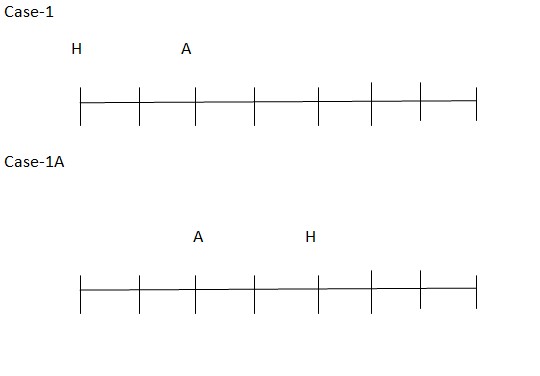 Case-2
 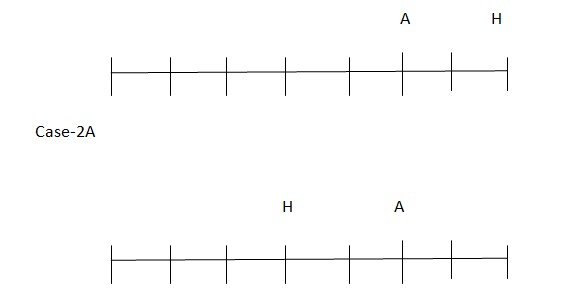 STEP II: D sits to the immediate left of H. As per this statement, CASE I will get eliminated and we will continue with CASE I (A), CASE II and CASE II (A) and the arrangement will look like this: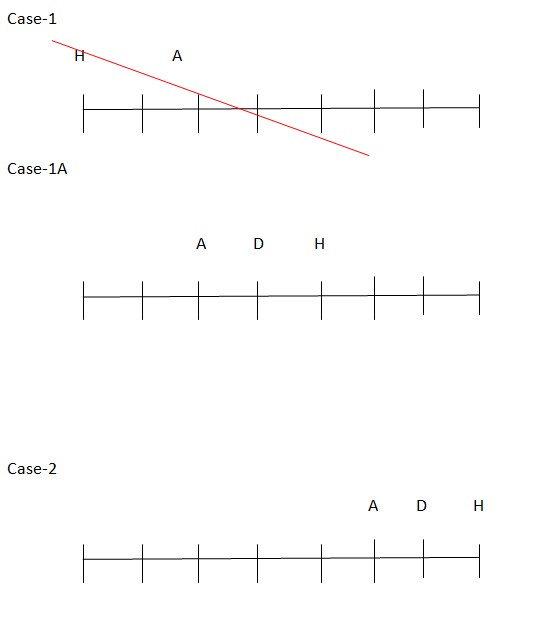
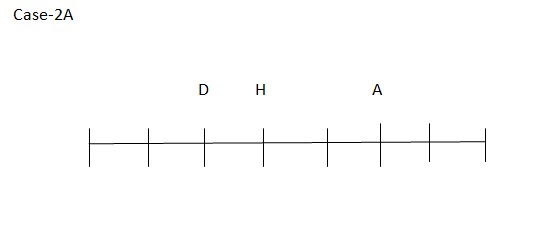 STEP III: F sits third to the left of G. F does not sit at the end of the row. As per this statement, CASE I (A) will get eliminated and we will continue with CASE II and CASE II (A) and the arrangement will look like this:
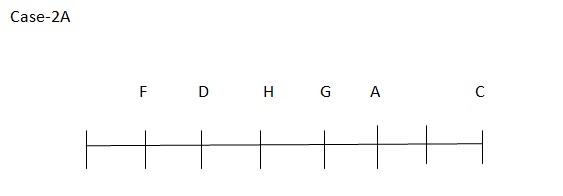
 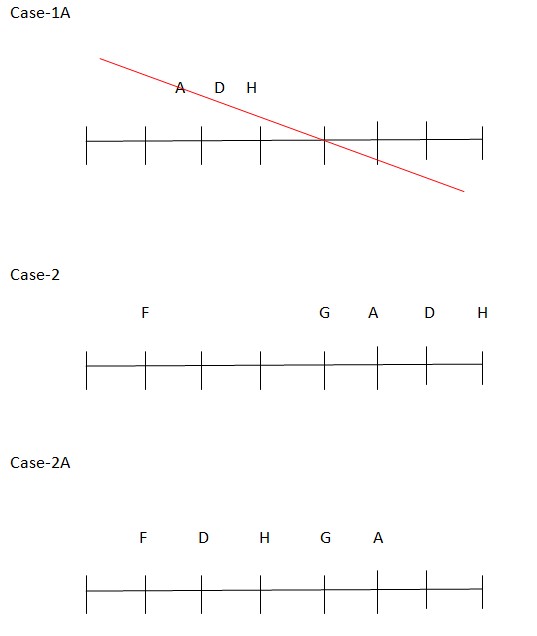 STEP IV: C sits three places away from G.Asperthisstatement, CASEII willgeteliminatedandwewillcontinuewith CASEII(A) andthe arrangementwilllook like this:
  STEP V: More than three persons sit between B and A. As per this statement, the final arrangement will look like this: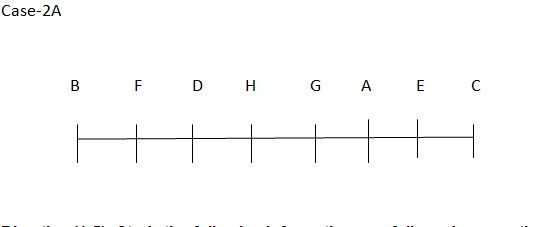
The arbitral proceedings in respect of a particular dispute commence on the date on which a request for that dispute to be referred to arbitration is �...
Under which section does the LLP Act provide for the removal of a designated partner?
A Continuing Guarantee applies to_______________
Under Section 417 BNSS, an appeal cannot be filed if the Magistrate of the first class imposes:
Which of the following entities cannot be an insurance company?
Who is considered the father of Analytical Jurisprudence, emphasizing law as a system of rules separated from morality?
Leniency provisions (lesser penalty for disclosure of cartel) are contained under:
An amendment to the constitution is__________.
P, residing in London, via email instructs his agent Q in Delhi to forge a document. Under which provision can P be held liable for abetment?
What is the primary focus of Part 2 of the Insolvency and Bankruptcy Code?
Relevant for Exams:


