


Question
What is the sum of room number of V, A, Q, X and Z?
Study the following information carefully and answer the questions given below it. Twelve persons P, Q, R, S, T, U, V, W, X, Y, Z and A are sitting around a hexagonal shaped table facing center. Six persons are sitting at corners of the table and remaining persons are sitting at the edges of the table. They all are living in different rooms numbered 1 - 12.Consecutive alphabetical names of the persons are not adjacent to each other. Consecutive numerical room numbers of the persons are not adjacent to each other. Two persons are sitting between Z and U who lives in room number 8.U sits at one of the corner of the table. Three persons are sitting between Z and the one who lives in room number which is square of an odd number but not 1. T sits fourth to the right of A who sits adjacent to U. T lives in room number 4.Immediate neighbor of U lives in the prime numbered room. Four persons are sitting between W and Y when counted from left of W who is not an immediate neighbor of Z. The one who lives in room number 1 sits third to the left of W who lives in room number 11. R and V are immediate neighbors. Q sits second to the right of the one who lives in room number 3.The one who lives in room number 12 sits second to the left of
X. Q and S lives adjacent to each other. P lives in room number 10. Q and W are not an immediate neighbor of each other. The room number of R is greater than the room number of Z.
X. Q and S lives adjacent to each other. P lives in room number 10. Q and W are not an immediate neighbor of each other. The room number of R is greater than the room number of Z.
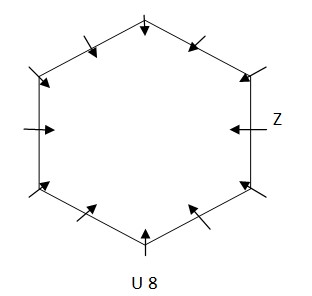 Case-2
 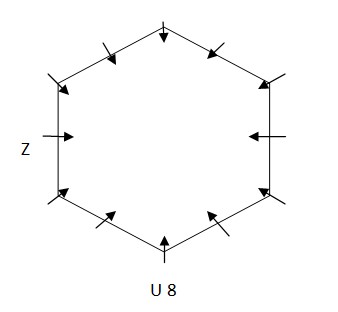 Three persons are sitting between Z and the one who lives in room number which is square of an odd number(9) but not 1. Case-1
 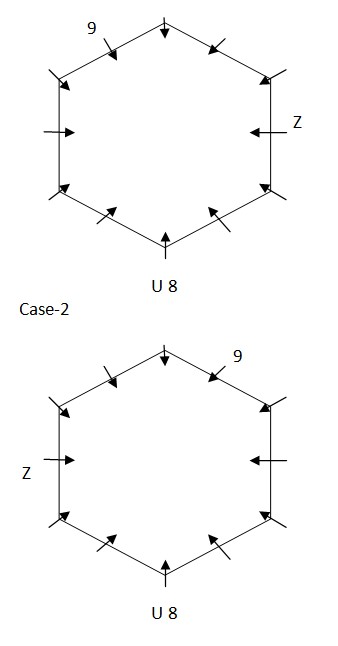 T sits fourth to the right of A who sits adjacent to U. T lives in room number 4. Case-1
 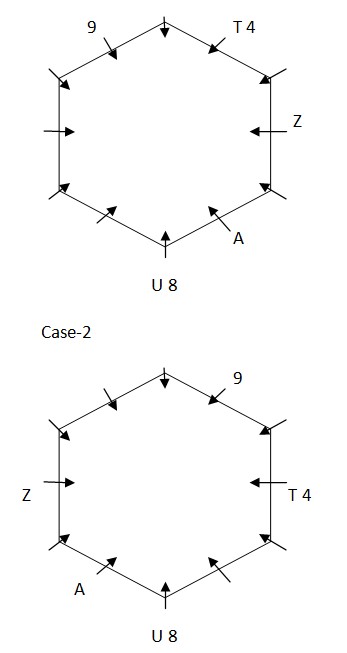 Immediate neighbors of U lives in the prime numbered room. Four persons are sitting between W and Y when counted from left of W who is not an immediate neighbor of Z. The one who lives in room number 1 sits third to the left of W who lives in room number 11. Case-1
 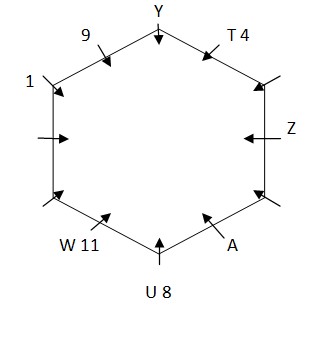 Case-2
 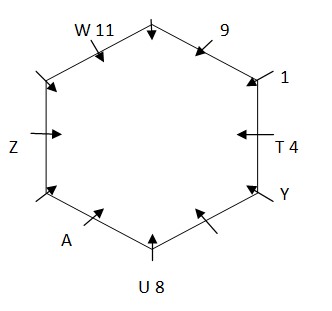 R and V are immediate neighbors. Q sits second to the right of the one who lives in room number 3. Q and W are not an immediate neighbor of each other. Q and S lives adjacent to each other. The one who lives in room number 12 sits second to the left of X. P lives in room number 10. The room number of R is greater than the room number of Z. Case-1
 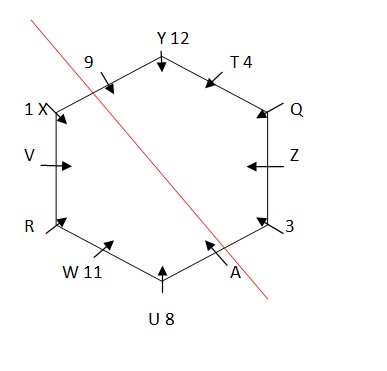 Case-2 final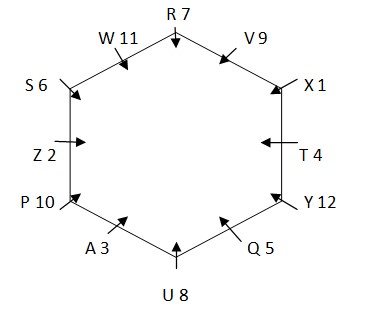
More Seating Arrangement Questions
- Six persons (D, E, F, G, H and I) sit in a linear row and face in north direction. G sits third to the right of F. Only H sits to the right of I. E sits to...
- Z is the _____ of Q.
- How many persons sit between G and the one who likes Bhopal?
- What is the position of T with respect to the one who works in HDFC in the final arrangement?
- Who among the following sits second to the left of C?
- Five friends, N, O, P, Q and R, are sitting in a straight line. N and O are adjacent to each other. O is between N and P. N is third to the left of Q. Q is...
- How many persons are sitting between X and P when counted to the right of X?
- Six persons sit around the circular table facing towards the center. H sits immediate right of E. D sits second to the left of B. G and F are adjacent to D...
- D, E, F, G and H are sitting on a bench all are facing towards the north. D sits next to E; F sits next to G. H sits at the extreme left end. F sits on the...
- Seven persons T, U, V, W, X, Y and Z sit in a straight row facing north direction. V sits third to the left of T. U sits adjacent to T. W sits second to th...
Relevant for Exams:
Hey! Ask a query
Please enter email id
The email must be a valid email address.
Please enter Mobile Number
Please enter valid Mobile Number
Please enter your Doubt

Think You're Ready for RBI Grade B?
RBI Grade B 2026 Phase 1 Memory Based Paper
- 200 Questions with Detailed Solutions
- Section-wise Coverage (GA, English, Quant & Reasoning)