


Question
Who is to the immediate left of father of C?
Answer the questions based on the information given below: Eight family members A, B, C, D, E, F, G and H are sitting around circular table facing the centre, but not necessarily in the same order. There are four males and four females. H is third to the right of B who is the son of
A. E is an immediate neighbor of H and second to the left of his son. F, who is married to B and is third to the right of E’s son. C and her mother A are immediate neighbor of each-other. C is mother of
D. G is female but she is not daughter of C and H. G is in third generation. F is not immediate neighbor of her husband’s sister. E is son-in-law of H and is not immediate neighbor of
D.
A. E is an immediate neighbor of H and second to the left of his son. F, who is married to B and is third to the right of E’s son. C and her mother A are immediate neighbor of each-other. C is mother of
D. G is female but she is not daughter of C and H. G is in third generation. F is not immediate neighbor of her husband’s sister. E is son-in-law of H and is not immediate neighbor of
D.
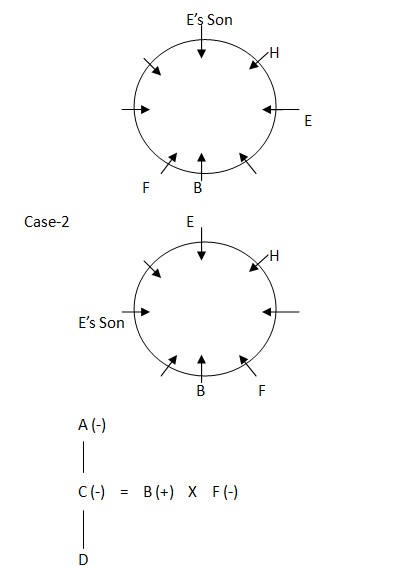 G is female but she is not daughter of C and H. G is in third generation. F is not immediate neighbour of her husband’s sister. E is son-in-law of H and is not immediate neighbour of D. C and her mother A are immediate neighbour of each-other. F is not immediate neighbour of her husband’s sister. E is son-in-law of H and is not immediate neighbour of D Case-1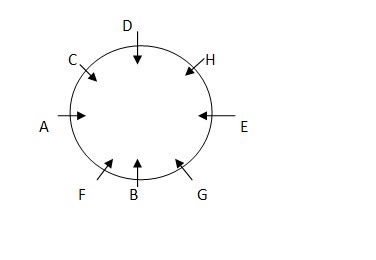
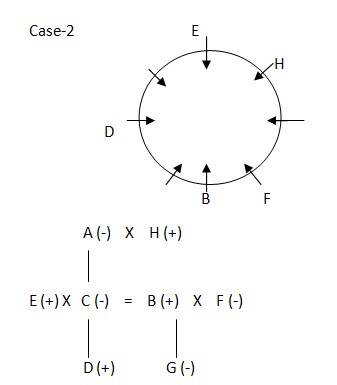 In case 2 there is no such space for A and C. So CASE2 is cancelled out. Final arrangement: Case-1
 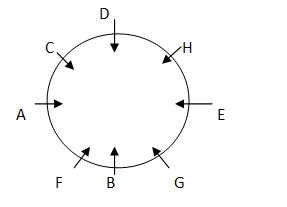 Blood relation Tree-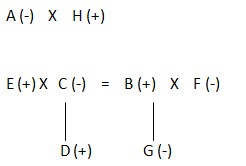
More Seating Arrangement Questions
- What is the position of Q with respect to O?
- Who among the following person uses Sony laptop?
- Four of the following five are alike in a certain way based on the given seating arrangement and so form a group. Which is the one that does not belong to ...
- Which of the following replaces blank ___(1)___?
- If L sits second to the left of O then how many seats are between L and R when counted from the right of R?
- Who sits to the immediate right of F?
- If Jaspreet is an immediate neighbor of Jasbir then who among the following likes Black?
- Statements: P ≤ J ≤ Q = M; Y ≥ Z > P Conclusions: I. J ≤ Z II. Z ˃ Y
- Sonal seated in ______?
- What is the position of A with respect to D?
Relevant for Exams:
Hey! Ask a query
Please enter email id
The email must be a valid email address.
Please enter Mobile Number
Please enter valid Mobile Number
Please enter your Doubt

Think You're Ready for RBI Grade B?
RBI Grade B 2026 Phase 1 Memory Based Paper
- 200 Questions with Detailed Solutions
- Section-wise Coverage (GA, English, Quant & Reasoning)