


Question
Which of the following statement(s) is/are true?
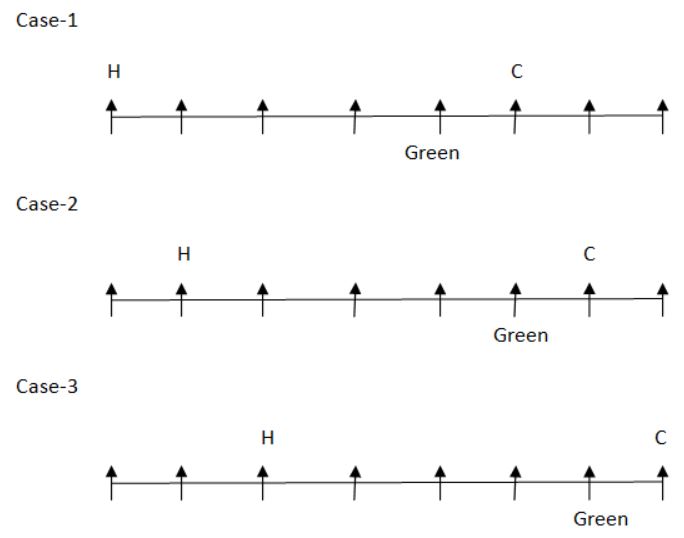 Two persons were seated between C and the one who likes Pink. F and the one who likes Pink were immediate neighbours. Two persons were seated between F and the one who likes Red. H does not like Red.
 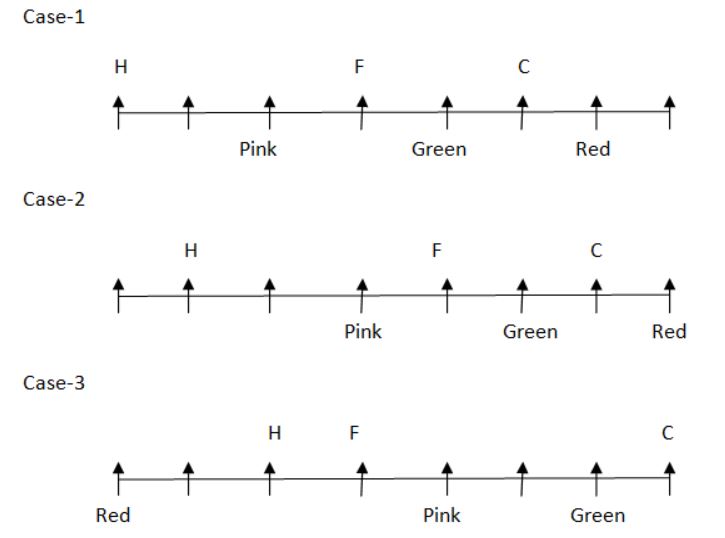 The number of persons seated to the left of the one, who likes Red was the same as between the number of persons seated to the right of the one who likes Blue. Two persons were seated between D and the one who likes Orange. Neither C nor F likes Orange.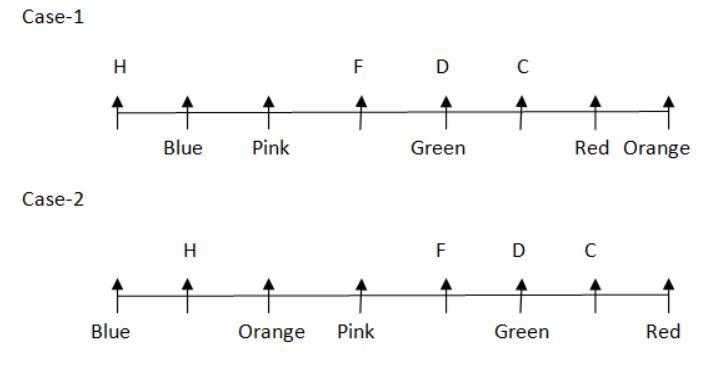
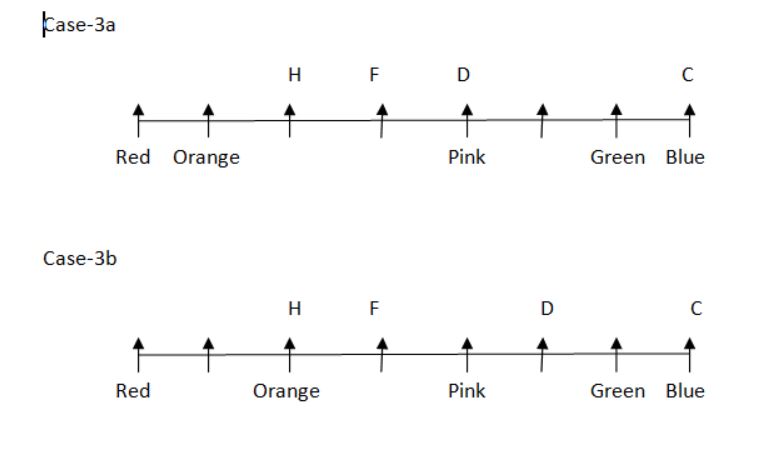 The number of persons seated between A and the one who likes Black was the same as between E and the one who likes Orange. The one who likes White seated second to the right of A. G and the one who likes Yellow were immediate neighbours. B neither like Blue nor Yellow.
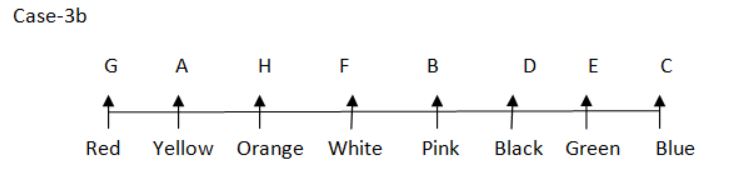 Case 1 and case 2 are invalid because the number of persons seated between A and the one who likes Black was the same as between E and the one who likes Orange. Case 3a is invalid because G and the one who likes Yellow were immediate neighbours. So, the final arrangement is
More Seating Arrangement Questions
- Which of the following Colour is liked by G?
- How many persons are sitting between O and N when counted from the left of O?
- What is the position of C with respect to D?
- Who among the following faces Umesh?
- Six girls T, U, V, W, X and Y are sitting around a circular table, facing the centre. Y is sitting third to the left of X. W is sitting to the immediate ri...
- Select the combination of numbers that when placed sequentially in the blanks of the given series will complete the series. j k _ m _ o p _ k _ m n o _ j ...
- Who sits fifth to the right of M?
- How many persons are sitting between P and X?
- If all the persons are rearranged in alphabetical order from left to right, then position of how many persons remain unchanged?
- How many persons are sitting between Sandeep and Swati in the anti- clockwise direction of Swati?
Relevant for Exams:
Hey! Ask a query
Please enter email id
The email must be a valid email address.
Please enter Mobile Number
Please enter valid Mobile Number
Please enter your Doubt

Think You're Ready for RBI Grade B?
RBI Grade B 2026 Phase 1 Memory Based Paper
- 200 Questions with Detailed Solutions
- Section-wise Coverage (GA, English, Quant & Reasoning)