


Question
Four of the following were in a certain group, which of the following that does not belong to that group?
Read the following information carefully and answer the questions given below. Eight members – M, N, O, P, Q, R, S and T of a family consists of three generations and were seated in a circular table facing centre, in which no three males were seated together. Each of them had a relationship with
M. All of them attend the seminar in a different month from April to November. No two persons attend the seminar in the same month. It is further known that either both or none of the parents are alive. Two persons were seated between P and M’s father and neither of them attends the seminar in November. The one who was seated second to the left of P attend the seminar in May. Q is married to the only sister of the one who attends the seminar in June and was seated to the immediate left of M’s daughter. Two persons were seated between N and M’s wife. Only one female attend the seminar after June. Two persons were seated between M and the one who attend the seminar in September. S and her brother attend the seminar in consecutive months. Two persons attend the seminar between P and R. T attend the seminar in August. M and his father were immediate neighbours. O, who is the son of M was seated to the immediate right of his sister and attend the seminar after M but not immediately. The one who attends the seminar in September is nephew to P and both were seated adjacent to each other. Q is from 1st generation. P is not the brother of M’s wife. Two persons were seated between Q and the one, who attended the seminar June. The one, who attended the seminar in May doesn’t face the one, who attended the seminar June. O and P are not neighbours.
M. All of them attend the seminar in a different month from April to November. No two persons attend the seminar in the same month. It is further known that either both or none of the parents are alive. Two persons were seated between P and M’s father and neither of them attends the seminar in November. The one who was seated second to the left of P attend the seminar in May. Q is married to the only sister of the one who attends the seminar in June and was seated to the immediate left of M’s daughter. Two persons were seated between N and M’s wife. Only one female attend the seminar after June. Two persons were seated between M and the one who attend the seminar in September. S and her brother attend the seminar in consecutive months. Two persons attend the seminar between P and R. T attend the seminar in August. M and his father were immediate neighbours. O, who is the son of M was seated to the immediate right of his sister and attend the seminar after M but not immediately. The one who attends the seminar in September is nephew to P and both were seated adjacent to each other. Q is from 1st generation. P is not the brother of M’s wife. Two persons were seated between Q and the one, who attended the seminar June. The one, who attended the seminar in May doesn’t face the one, who attended the seminar June. O and P are not neighbours.
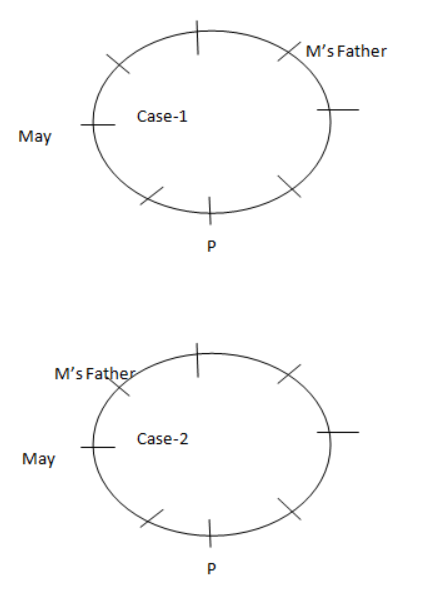 M and his father were immediate neighbours. Two persons were seated between M and the one who attend the seminar in September. The one who attends the seminar in September is nephew to P and both were seated adjacent to each other.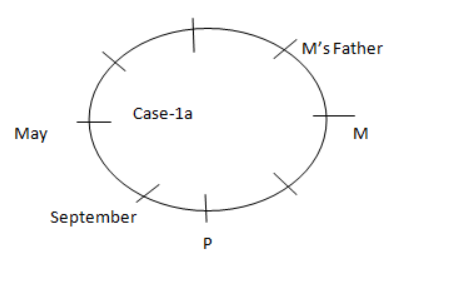
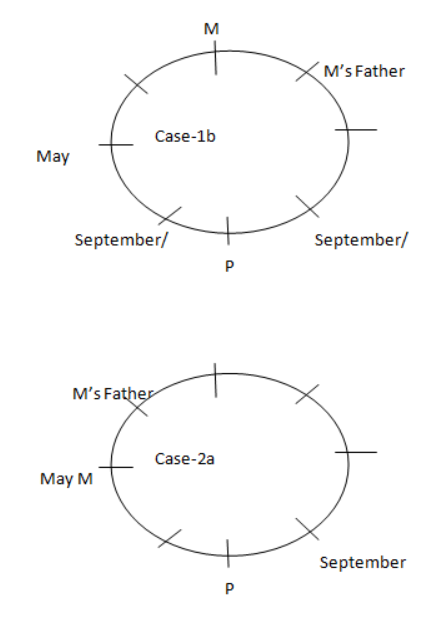
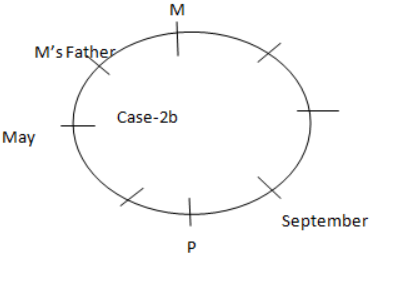 O, who is the son of M was seated to the immediate right of his sister and attend the seminar after M but not immediately. Q is married to the only sister of the one who attends the seminar in June and was seated to the immediate left of M’s daughter. Two persons were seated between N and M’s wife. Q is from 1st generation. P is not the brother of M’s wife. Two persons were seated between Q and the one, who attended the seminar June. The one, who attended the seminar in May doesn’t face the one, who attended the seminar June. O and P are not neighbours. Two possibilities in blood relation.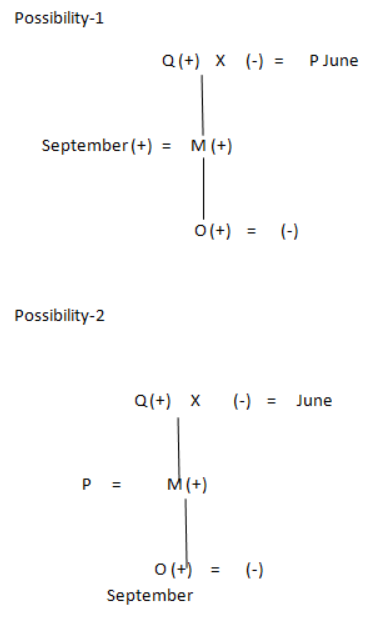
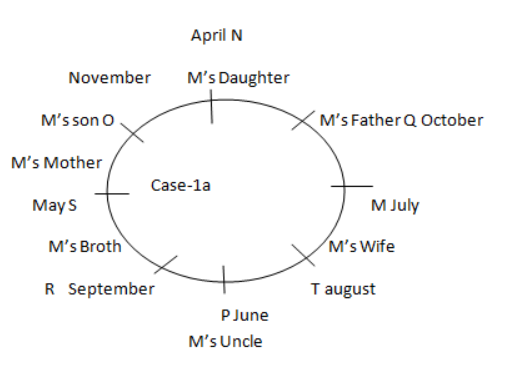
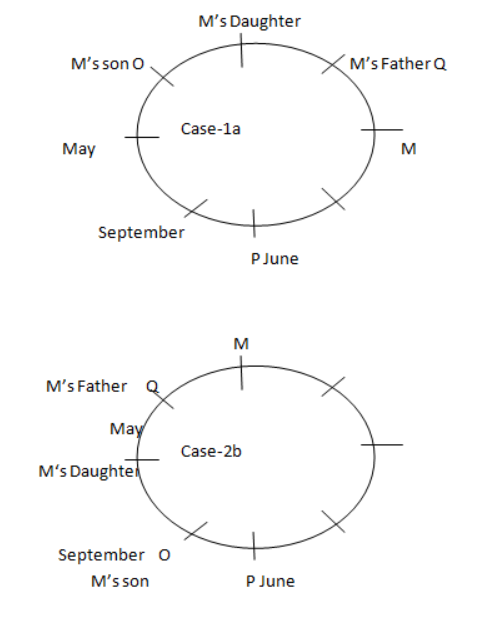 Hence, case 1b and case 2a are invalid because O was seated to the immediate right of M’s daughter and Q was seated to the immediate left of M’s daughter. Case 2b is invalid because P cannot attend the seminar in June (possibility 2 of blood relation diagram) So, possibility 2 of blood relation diagram is invalid.
 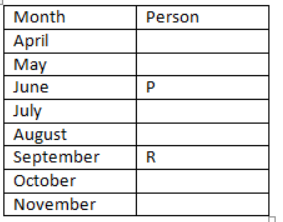 Only one female attend the seminar after June. S and her brother attend the seminar on consecutive months. Two persons attend the seminar between P and R. T attend the seminar in August.
 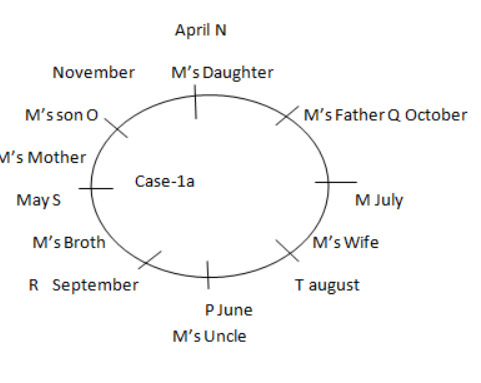 So, the final solution is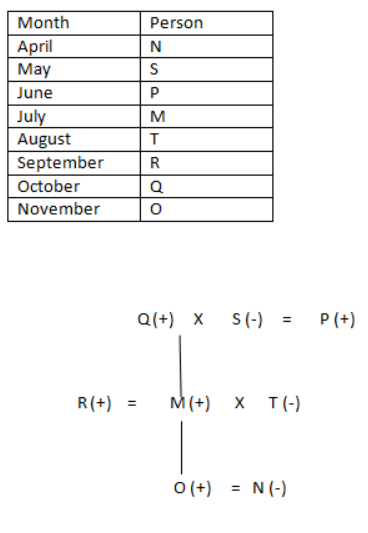
More Seating Arrangement Questions
- Which of the following colour does V like?
- Which among the following is the correct combination?
- Four of the following five are alike in a certain way as per the given arrangement and hence form a group, which one of the following does not belong to th...
- In a row of boys, A is thirteenth from the left and D is seventeenth from the right. If in this row A is eleventh from the right, then what is the positio...
- Five people are standing in a line facing north R, L, P, J and C, not necessarily in this order. R is standing at one of the extreme ends. Two people are s...
- If Q interchange its position with the person who paid Rs. 250, then what is the new position of Q from the right end?
- Who among the following has ordered from Meesho?
- Who amongst the following reads The Hindu?
- Six professional Shekhar, Sidhu, Kapil, Bhuvan, Tanu and Ketan, are sitting around a hexagonal table, each at one corner, and are facing the centre of the ...
- Five person A, B, C, D and E are sitting around a circular table (not necessarily in the same order). B sits immediate left of A. C is on the left side of ...
Relevant for Exams:
Hey! Ask a query
Please enter email id
The email must be a valid email address.
Please enter Mobile Number
Please enter valid Mobile Number
Please enter your Doubt

Think You're Ready for RBI Grade B?
RBI Grade B 2026 Phase 1 Memory Based Paper
- 200 Questions with Detailed Solutions
- Section-wise Coverage (GA, English, Quant & Reasoning)